Search interest in security cameras isn’t just a Los Angeles-wide trend — it’s showing up city by city, right across the communities NaMiSmart works in most: Burbank, Glendale, and Pasadena all register real, meaningful search volume for security cameras over the past few months, not just as a regional blip.
That tracks with what we see on the ground. More homeowners in these neighborhoods are asking the same core questions: what kind of system actually makes sense for a property like mine, what’s this “IP camera” thing that keeps coming up, and what should I know before I have someone install it?
This post covers both — the fundamentals every homeowner in this area should know before choosing a system, and the technical shift (IP cameras) that’s driving a lot of the current interest.
What Actually Matters When Choosing a Home Security Camera System
Before getting into brands or specs, a few things determine whether a system is actually useful when you need it:
- Coverage that matches how the property is used — entry points, driveway, gate, and blind spots, not just “a camera on the front door”
- Resolution clear enough to matter — footage that’s technically “recorded” isn’t useful if a face or license plate is an unreadable blur
- Reliable storage — local NVR storage, cloud storage, or a hybrid, with a clear answer for what happens when storage fills up
- Remote access that’s actually secure — being able to check footage from your phone shouldn’t come with a weak security trade-off
- A plan for the property you actually have — a flat suburban lot, a hillside driveway, and a gated multi-building property all need different camera placement
Most of the frustration homeowners run into with security cameras traces back to one of these being an afterthought rather than something planned up front.
IP Security Camera Systems, Explained
If you’ve searched for security cameras recently, you’ve likely run into the term “IP camera” — and it’s worth understanding, because it’s become the standard for a reason.
IP stands for Internet Protocol. An IP camera captures and sends video as digital data over a network, rather than sending an analog signal the way older CCTV-style cameras did. In practical terms, that shift brings a few real advantages:
- Higher resolution and detail — IP cameras support much higher resolutions than analog cameras ever could, which matters when you actually need to make out a face or a plate
- Power and data over one cable — most wired IP cameras use PoE (Power over Ethernet), so a single Cat6 cable delivers both power and the video feed, instead of running separate power and coax lines
- Easier to scale — adding more cameras to an IP system generally means adding more network drops, not rebuilding the whole wiring setup
- Better recording software — IP systems pair with modern NVR (network video recorder) or VMS (video management system) software, which is where features like AI person/vehicle detection and smart search actually come from
Almost every system NaMiSmart installs today, residential or commercial, is IP-based. The older analog CCTV approach still exists, but for a new install, there’s rarely a reason to choose it over IP.
What’s Different About Homes in Burbank, Glendale, and Pasadena
These three cities sit right next to each other, but the properties inside them aren’t identical — and that affects how a camera system should actually be planned:
- Hillside terrain. Burbank Hills, the Glendale foothills, and Pasadena’s hillside neighborhoods all involve driveways, gates, and sightlines that a flat-lot camera plan doesn’t account for. Coverage needs to follow the terrain, not a standard template.
- Older housing stock. Pasadena in particular has a large number of Craftsman bungalows and Spanish Revival homes, where wiring paths and attic access aren’t the same as a newer tract home. That’s a planning consideration, not a dealbreaker — it just needs to be assessed on-site rather than quoted sight unseen.
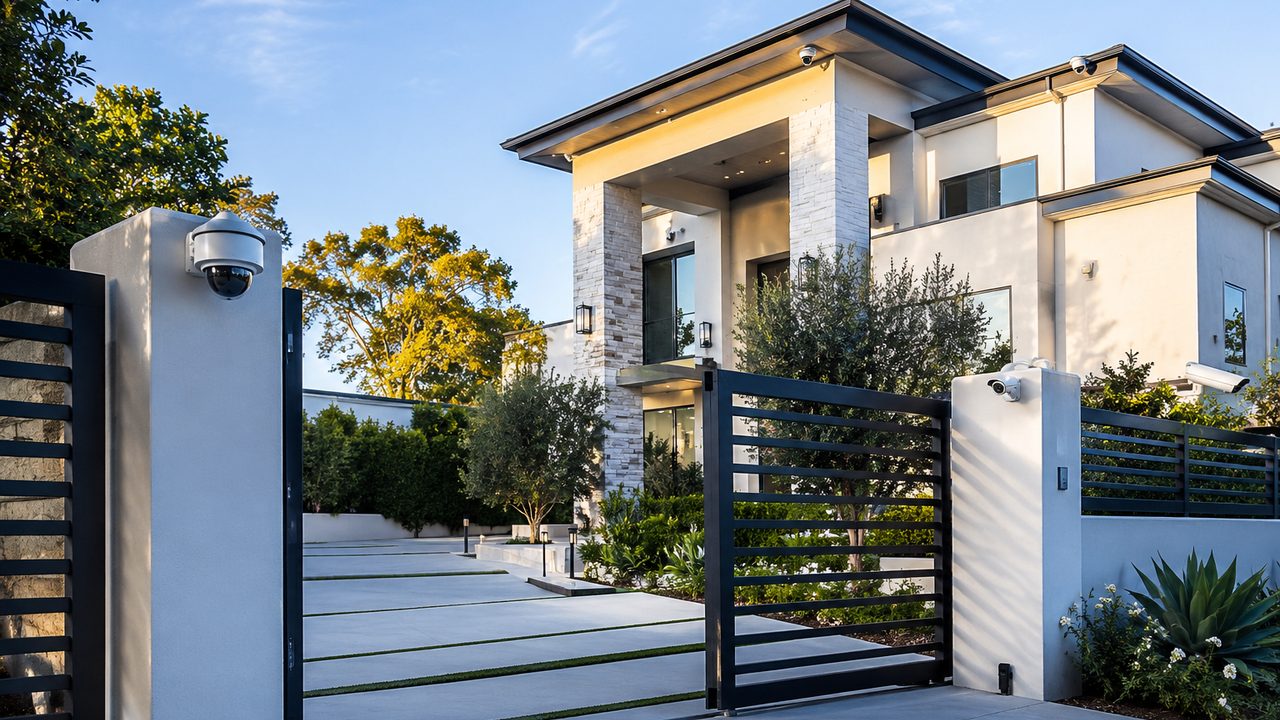
- Gated and estate properties. Longer driveways and perimeter walls are common throughout all three cities’ hillside areas, which usually means the entry gate and driveway need their own dedicated coverage plan, not just a doorbell camera.
- A genuine mix of property types. Dense multi-family buildings near Downtown Burbank or Glendale sit close to large single-family hillside estates — there’s no one-size-fits-all system for “this area.”
None of this is a reason to expect a complicated install — it’s the reason a proper on-site assessment matters more than a generic online quote.
Common Mistakes We See
- Buying cameras based on price or brand recognition alone, without a coverage plan for the actual property
- Placing cameras where they’re easy to mount rather than where they actually cover entries and blind spots
- Choosing wireless cameras for a spot better served by a wired PoE connection, and dealing with dropped connections later
- Not deciding on storage (local vs. cloud vs. hybrid) up front, then being surprised by a monthly fee or by footage that wasn’t actually being saved
- Skipping an on-site assessment for a hillside or older home, resulting in a plan that doesn’t match how the property is actually laid out
How NaMiSmart Approaches Home Security Camera Installs
Every residential install starts with an on-site assessment — walking the property, mapping coverage around actual entry points, driveways, and blind spots, and accounting for the property’s specific layout, whether that’s a flat suburban lot or a hillside estate with a long gated driveway. From there, we spec IP-based cameras and recording hardware sized to the property and the budget, not a one-size-fits-all package.
We handle this across security cameras for homes and businesses throughout Burbank, Glendale, Pasadena, and the surrounding communities — with Burbank as our home base, meaning faster response times and no travel fee for the areas we cover most.
Need a Security Camera System in Burbank, Glendale, or Pasadena?
NaMiSmart designs and installs home security camera systems across Burbank, Glendale, Pasadena, and the surrounding San Fernando Valley and Greater Los Angeles communities. If you’re comparing options, dealing with an older or hillside property, or just want a straight answer on what a system should actually cost, request a free on-site assessment and we’ll walk the property with you.
FAQ
What’s the difference between a regular security camera and an IP security camera?
An IP (Internet Protocol) camera sends digital video data over a network cable or Wi-Fi, instead of an analog signal over dedicated coaxial cable. In practice, that means higher resolution, easier scaling (add more cameras without running new dedicated lines for each one), and — when wired — the ability to run power and data over a single Cat6 cable using PoE (Power over Ethernet). Most modern home and business systems, including everything NaMiSmart installs, are IP-based.
Do you install home security cameras in Burbank, Glendale, and Pasadena?
Yes. Burbank is our home base, and Glendale and Pasadena are both well within our regular service area — we’re on these streets constantly. Being close means faster response times for both installs and service calls, with no long-distance travel fee.
Are older or hillside homes harder to wire for security cameras?
They take more planning, not more guesswork. Pasadena’s Craftsman bungalows and Spanish Revival homes, and hillside properties throughout Burbank, Glendale, and the surrounding foothills, often have different wiring paths, attic access, and terrain than a standard tract home. We assess this on-site before quoting so the plan accounts for the property as it actually is, not a generic layout.
Do I need to choose between wired and wireless cameras?
Often it’s a mix. Many homes end up with wired PoE cameras at the primary entry points and driveway, with wireless filling in harder-to-run spots. We cover the trade-offs in more depth in our post on wired vs. wireless security cameras.
Can I avoid a monthly subscription fee?
Yes — local NVR-based storage with no required monthly fee is one of the most common systems we install for homeowners in this area. See our post on security cameras without a monthly fee for how that works.
Does NaMiSmart serve homeowners, or only businesses?
Both. Residential systems — gate, driveway, perimeter, and interior coverage — are a regular part of what we install across Burbank, Glendale, Pasadena, and the surrounding communities, alongside our commercial and enterprise work.